 PetCare Updates

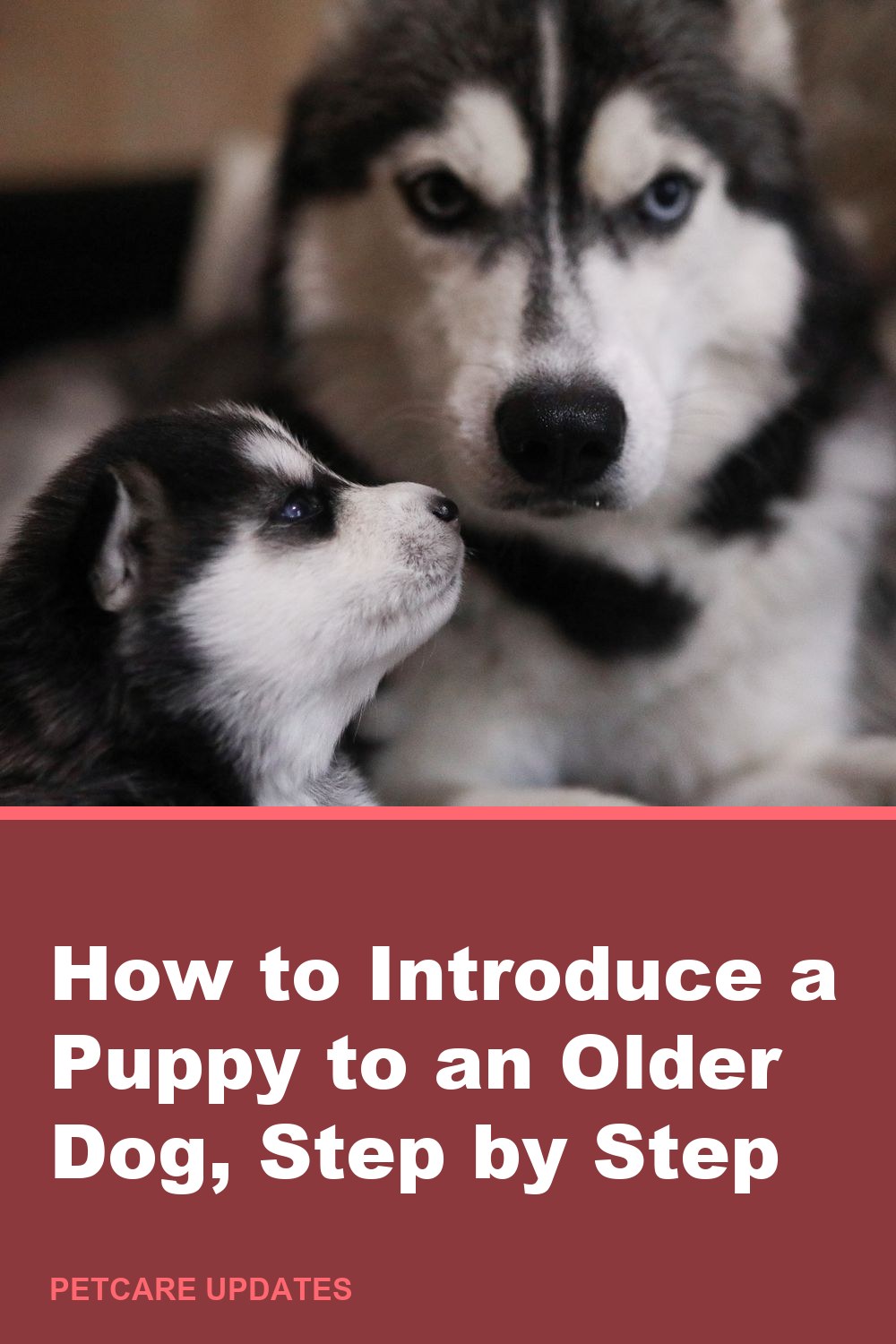

- Go slowly and let your older dog's routines, boundaries and bond with you set the pace, not the puppy's enthusiasm.
- Make the first meeting brief and on neutral ground, starting with a sniff through a gate or crate door.
- Give your older dog a puppy-free retreat and daily one-on-one time, and never scold a growl: it is her way of telling you how she feels.
To introduce a puppy to an older dog, go slowly and let the older dog's routines, boundaries and bond with you set the pace. Have the dogs meet briefly on neutral ground first, set up a puppy-proof space so your older dog can always get away, reward calm behaviour, and keep giving her daily time without the puppy. Whole Dog Journal's behaviour guidance on this makes the same point, and it matters most in the first days, when habits form on both sides.
Start by reading your older dog
Before you plan anything, ask how your older dog feels about puppies. Does she play happily with tiny pups, or does she back away? Does she enjoy rough play, or does she growl and snap at pushy dogs? Whole Dog Journal says her answers decide how slowly you need to take the introduction.
A dog who loves puppies may settle in quickly. A shy or grumpy dog needs more distance, more breaks and more patience from you. Plan for the slower version and speed up only if she shows you she is ready.
The introduction in six steps, with timing and what to watch
These steps follow the order in which things happen. Move on to the next one only when the current one looks calm. The timing is your older dog's, not a calendar's.
- Before the puppy comes home: build the puppy-proof space and gather the kit. Whole Dog Journal lists a crate, one or several baby gates, edible chews or stuffable puzzle toys, and high-value treats your older dog loves. The crate and gates keep the puppy out of trouble when you cannot supervise, and they stop him from pestering your older dog constantly. If your dogs' size and fitness allow it, a low gate that the adult can jump but the puppy cannot gives her an escape route.
Common mistake: buying the gear after the puppy arrives, so the first hours are improvised.
It is working when: the puppy can be contained in seconds and your older dog has a spot he cannot reach. - The first meeting: neutral ground, kept short. Your older dog considers your home hers, and depending on her personality she may react badly to an unfamiliar dog walking in. Whole Dog Journal suggests meeting somewhere neutral, such as a public place or a friend's house, and keeping the experience brief. Start with a sniff through a gate or crate door, so nobody worries about the older dog nipping or knocking over the puppy.
Common mistake: letting the first contact happen face to face at your front door.
It is working when: both dogs sniff and then lose interest, or look relaxed. - Still on neutral ground: a side-by-side walk. The goal is a shared activity that takes their attention off each other. Ideally each dog has their own person. Watch body language: if either dog looks tense, afraid or aggressive, keep them apart. If both look loose and relaxed, you can gradually bring them closer so they sniff the same things. If tension appears, move farther away until both relax again.
Common mistake: pushing the dogs closer because the puppy is eager.
It is working when: you can close the gap a little at a time without either dog stiffening. - From the first day at home: confine the puppy whenever you cannot supervise. Use the crate or gated area for naps and for any moment your attention is elsewhere. Use the chews and stuffable toys so both dogs can enjoy something in each other's presence. Feed them close together but in separate crates, so there is no worry about food theft.
Common mistake: leaving the dogs together "for just a minute".
It is working when: your older dog eats or chews calmly with the puppy in view. - Throughout the first weeks: pay your older dog for good behaviour around the puppy. Give a high-value treat whenever she looks at the puppy, and praise her when she approaches him in a friendly way. You want her to link the puppy with good things. (If you worry about the treat count, see our post on how many treats cats and dogs can have each day.)
Common mistake: rewarding only the puppy, so the older dog sees him as the one who gets everything.
It is working when: she starts glancing at the puppy and then at you, expecting something nice. - Every day, for as long as it takes: protect her breaks and her boundaries. Confine the puppy for a nap or keep him busy elsewhere when your older dog is resting, so she gets time off from babysitting. As she grows comfortable, she may need fewer breaks. Teach the puppy that certain rooms or furniture are off-limits if your older dog is very shy or grumpy with other dogs.
Common mistake: waiting for the older dog to "sort it out" alone.
It is working when: she chooses to stay in the same room as the puppy, not just tolerate him from a distance.
Backing up your older dog when the puppy is rude
Your older dog will teach the puppy how she wants to be treated, and you can speed that up by supporting her. Whole Dog Journal lists the behaviours many adult dogs dislike: being jumped on, having toys or treats stolen, being woken from a nap, and being bitten or chewed too roughly.
If your older dog tenses up or growls, call the puppy to you or toss him a toy. If he keeps going while she is plainly not in the mood, confine him. If she is resting, keep him away from her so he cannot pester her.
Do not scold her for growling. A growl is information: she is telling the puppy and you how she feels. She did not ask for a puppy, and respecting her control over her own body while he learns manners is part of the job. If a puppy is mouthing everything in sight, our post on why puppies bite and how to manage it helps you teach him gentler habits.
Keep your older dog's one-to-one time
A puppy takes a great deal of work, and it is easy for the older dog to slide down the list. Set aside time each day for an activity with just you and her. It can be a walk, play, or cuddling in bed: whatever she loves. According to Whole Dog Journal, this protects your bond and helps prevent her from feeling jealous of the puppy.
Think of it as part of the introduction, not a reward for finishing it. A dog who still has her special time with you has less reason to resent the newcomer. This approach rests on the same principle as understanding reinforcement: dogs repeat what pays off for them, so make calm behaviour around the puppy pay off.
Signs to keep going, and signs to slow down
Keep going when you see:
- loose, relaxed posture in both dogs;
- your older dog approaching the puppy in a friendly way;
- calm eating and chewing near each other;
- your older dog needing fewer puppy-free breaks.
Slow down and add distance when you see:
- either dog looking tense, afraid or aggressive;
- your older dog tensing or growling when the puppy approaches;
- the puppy ignoring her signals and continuing to pester her;
- your older dog avoiding the shared space altogether.
Back up to the last step that went well, move farther apart and let both dogs relax before trying again. If your older dog's reactions worry you, or you are unsure what her body language means, ask your vet, who can point you to a qualified behaviour professional.
A simple daily routine for the first weeks
A repeatable day makes everything easier on both dogs. A printable checklist can help you keep track; the Honest Toolkit has a free new puppy checklist you can use alongside this plan.
- Morning: a puppy-free walk or play session with your older dog.
- Daytime: supervised time together, with the puppy confined whenever you cannot watch.
- Naps and rest: the puppy in the crate or gated room, so your older dog gets a real break.
- Meals: close together but in separate crates.
- Evening: more one-on-one time for your older dog.
I wrote an ebook on this: The Basics of Puppy Training: A Comprehensive Guide.
As an Amazon Associate I earn from qualifying purchases: if you buy through these links I may earn a small commission, at no extra cost to you. Each link opens a search on the Amazon store for your country.
Watch or listen to this episode
Sources
Photo: Kateryna Babaieva / Pexels

I'm an Italian creator who builds apps, games and websites. I run PetCare Updates with the help of AI tools: every article starts from the sources linked above, and I check what goes out. I'm not a doctor, a lawyer or a financial adviser. Spotted a mistake or have an idea? Write to me.
Instagram @spartaco_94_My websiteWrite to meAbout this blogWritten by Ciro Irmici (Ciro Simone Irmici), with the help of AI tools. Ciro Irmici's website










 The Basics of Puppy Training: A Comprehensive Guide
 Understanding Feline Behavior: Training Your Cat
 Solving Common Behavioral Issues in Dogs and Cats





