 PetCare Updates

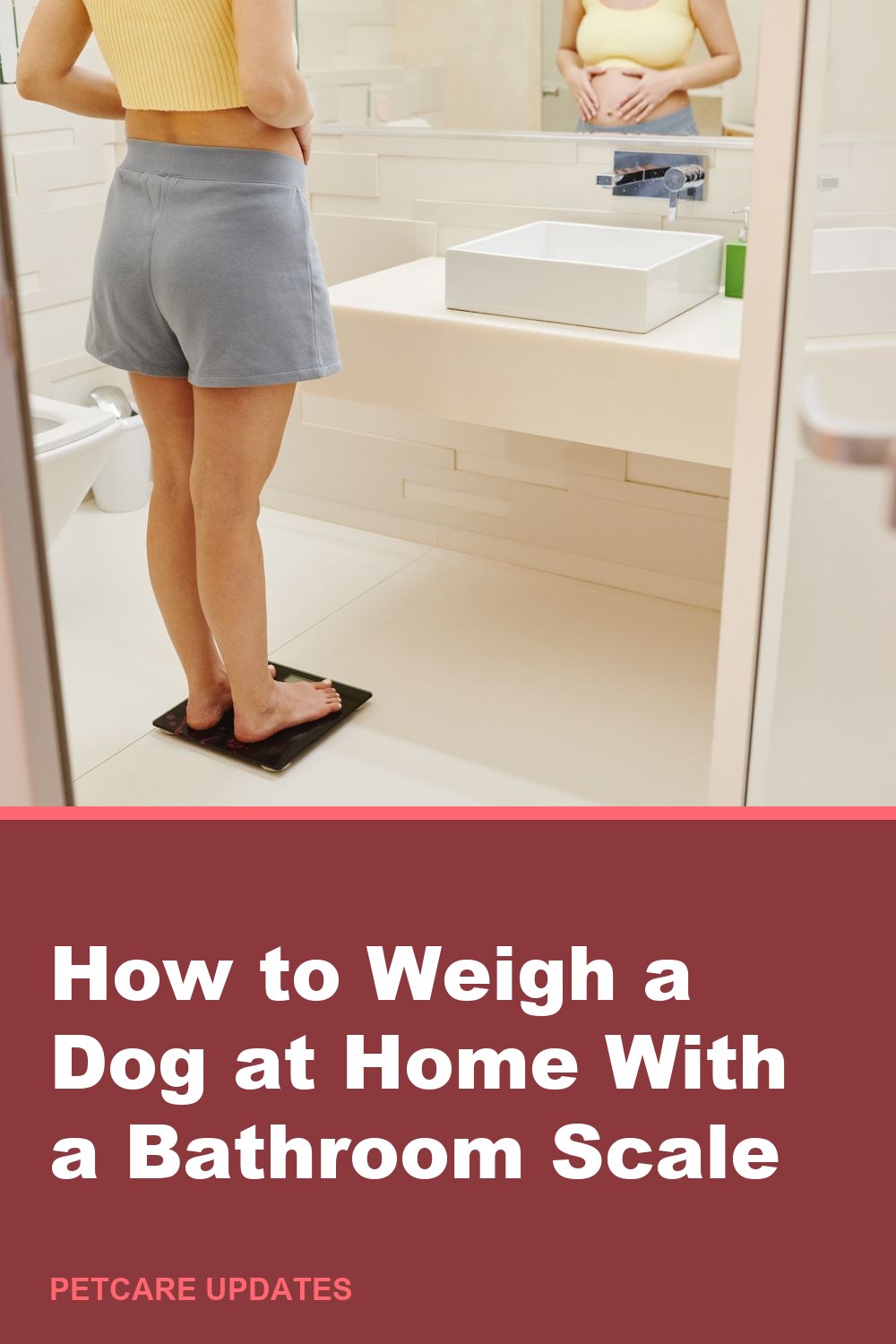
- Weigh yourself, then weigh yourself holding your dog; the difference between the two readings is your dog's weight.
- Use the same scale, on a hard level floor, at the same time of day, ideally before the first meal, so readings can be compared.
- Weight changes you did not plan, especially steady loss, are worth a call to your vet; a new diet or routine can explain some of them.
To weigh a dog at home, step on a bathroom scale on your own and note the number. Then pick your dog up, step on again, and subtract your own weight from the second reading. What is left is your dog. The method suits any dog you can lift safely, and it matters now because the American Kennel Club reports that more than half of dogs in the United States are overweight or obese. Weight tends to creep up slowly, so a number written down is far more reliable than your eyes.
The bathroom-scale method, step by step
Brian Collins, DVM, of the Cornell University College of Veterinary Medicine, describes this method for dogs that an owner can lift. It needs no special equipment, only a little care in how you repeat it.
- Put the scale on a hard, level surface such as a tiled or wooden floor. Carpet can throw the reading off.
- Stand on it alone and write down the number.
- Pick up your dog, step on again, and write down the second number.
- Subtract the first number from the second. That is your dog's weight.
- Write the result and the date somewhere you will find it again.
Do the weigh-in the same way each time: same scale, same spot, same time of day. The AKC advises weighing before your dog's first meal, which removes one variable.
When the bathroom scale is not the right tool
Some dogs are too small, too wriggly or too heavy for this method. The AKC lists several alternatives.
- Very small dogs and puppies under 10 pounds: a baby, kitchen or postal scale gives a reading that is accurate to the gram.
- Dogs that will not keep still: put them in a secure, well-ventilated box on the scale, then subtract the weight of the empty box.
- Large dogs you weigh regularly: a dedicated dog scale is a convenient option. Before buying, check that it supports your dog's maximum weight and that the platform is big enough for your dog to stand on all four feet comfortably.
- Large, nervous or fidgety dogs: the AKC says most veterinary practices will let you bring your dog in for a free weight check. The clinic scale can be more accurate, and short, calm visits can help your dog feel better about the vet.
Home weigh-ins are not practical or necessary for every dog, so using the clinic scale is not a failure.
A weigh-in routine you can repeat
A routine is what turns a single number into useful information. Here is a simple version, organised by when each step happens.
Before the weigh-in
- Choose a time of day you can repeat, ideally before breakfast.
- Set the scale on a hard, level floor and leave it in that spot.
- If your dog is unsure about the scale, introduce it slowly. The AKC suggests rewarding your dog for approaching it, then sniffing it, then putting a paw on it, and finally standing or sitting calmly. Use praise and treats.
During the weigh-in
- Take both readings (you alone, you with your dog) one straight after the other.
- Keep it calm and brief. A dog that struggles gives a poor reading and a worse memory of the scale.
Right after the weigh-in
- Record the weight and the date.
- Add a short note if anything changed recently, such as a different food, more or fewer treats, a new exercise routine or a major life event.
That last note is easy to skip, and it is the most useful one, as the next sections explain. If you give treats during training, our post on how many treats cats and dogs can have each day can help you keep them in proportion.
How often to weigh your dog, by situation
There is no single schedule for every dog. According to the AKC, age, health, activity level, diet and sex all affect how often you should weigh. Dr. Collins says your vet may recommend anything from every few days to weekly or every few months, so ask what suits your dog. The guidance below comes from the veterinarians quoted by the AKC.
- New to your home: Michael Stone, DVM, of Tufts University suggests monthly weigh-ins to set a baseline. After about six months you should have a good feel for how much food your dog needs, and you can weigh roughly every six months.
- Puppies: Dr. Kasey Mabry, an internal medicine specialist, recommends daily weigh-ins until 4 weeks old and every 1 to 3 days from 5 to 8 weeks. After 8 weeks, weigh every few weeks to monthly while they grow.
- Senior dogs: at least every three months, which can show subtle changes linked to age-related conditions. Our post on assessing senior dog quality of life at home covers what else to watch.
- Pregnant dogs: weekly during pregnancy and in the period right after birth.
- Dogs with chronic health conditions: Dr. Mabry says many conditions call for monitoring every two to three months, or every six months when the condition is clinically stable. Her list includes diabetes, kidney disease, heart disease, thyroid and Cushing's or Addison's disease, among others. Your vet will tell you which schedule fits.
Dr. Mabry adds a caution about the six-month rhythm. It assumes nothing has changed in diet (brand, formulation, amount or treats), exercise, work status, neuter status, environment or other big life events. If any of those shift, weigh sooner.
The one thing most owners miss: the number is not the whole picture
A weight on its own does not say whether your dog is lean, trim or carrying extra. The AKC points out that two dogs of the same weight can have very different amounts of fat and muscle. Vets often use a 9-point body condition score. Dr. Mabry explains that 1 to 3 is underweight, 4 to 5 is ideal, and 6 to 9 ranges from overweight to obese.
At home, you can do a simple version alongside the scale:
- Feel the ribs. At an ideal condition they are easy to feel under a thin layer of fat.
- Look from above for a visible waist.
- Look from the side for an abdominal tuck.
Builds differ by breed. The AKC compares a Labrador Retriever with certain sighthounds, such as the Azawakh, so ask your vet what is normal for your dog's breed. If you would like a second reference point, the Bestiepedia page on whether your pet is a healthy weight is a useful companion to your own records.
So pair the scale with a hands-on check, and keep a note of what you are feeding. A steady number with a changed diet can still mean something, and a rising number with an unchanged diet is worth raising.
When to tell your vet about a weight change
Dr. Stone told the AKC that trim dogs tend to live longer than overweight ones, especially large breeds. Extra weight puts more strain on joints and raises the risk of osteoarthritis, diabetes, heart disease and some cancers. A rising trend is therefore worth acting on early, with your vet guiding any change to food.
Weight loss deserves the same attention. The AKC notes that persistent, unintended loss can point to an underlying condition, and catching it early means earlier diagnosis and treatment. Reasons to book a call or a visit include:
- Your dog's weight keeps climbing over several weigh-ins and you have not changed the food.
- Your dog is losing weight and you have not changed anything.
- Your dog has a chronic condition and the numbers move between check-ins.
- You cannot feel the ribs easily, or they are very prominent.
Bring your notebook. A page of dated weights and diet notes gives your vet far more to work with than a single remembered figure. Please do not adjust your dog's food on your own to correct a change; ask your vet how much to feed. Portion changes also affect digestion, as we explain in why portion size changes your dog's stools.
A quick plan to start this week
- Pick one scale and one spot on a hard floor.
- Do your first weigh-in before breakfast and write down the date and number.
- Feel your dog's ribs and note what you find.
- Ask your vet how often your particular dog should be weighed.
- Use the Honest Toolkit pet care calendar checklist to put the next few weigh-ins on your schedule.
A few minutes of steady record-keeping is usually enough to notice a trend while it is still small.
As an Amazon Associate I earn from qualifying purchases: if you buy through these links I may earn a small commission, at no extra cost to you. Each link opens a search on the Amazon store for your country.
Watch or listen to this episode
Sources
Photo: Matilda Wormwood / Pexels

I'm an Italian creator who builds apps, games and websites. I run PetCare Updates with the help of AI tools: every article starts from the sources linked above, and I check what goes out. I'm not a doctor, a lawyer or a financial adviser. Spotted a mistake or have an idea? Write to me.
Instagram @spartaco_94_My websiteWrite to meAbout this blogWritten by Ciro Irmici (Ciro Simone Irmici), with the help of AI tools. Ciro Irmici's website











 The Basics of Puppy Training: A Comprehensive Guide
 Understanding Feline Behavior: Training Your Cat
 Solving Common Behavioral Issues in Dogs and Cats





