 PetCare Updates

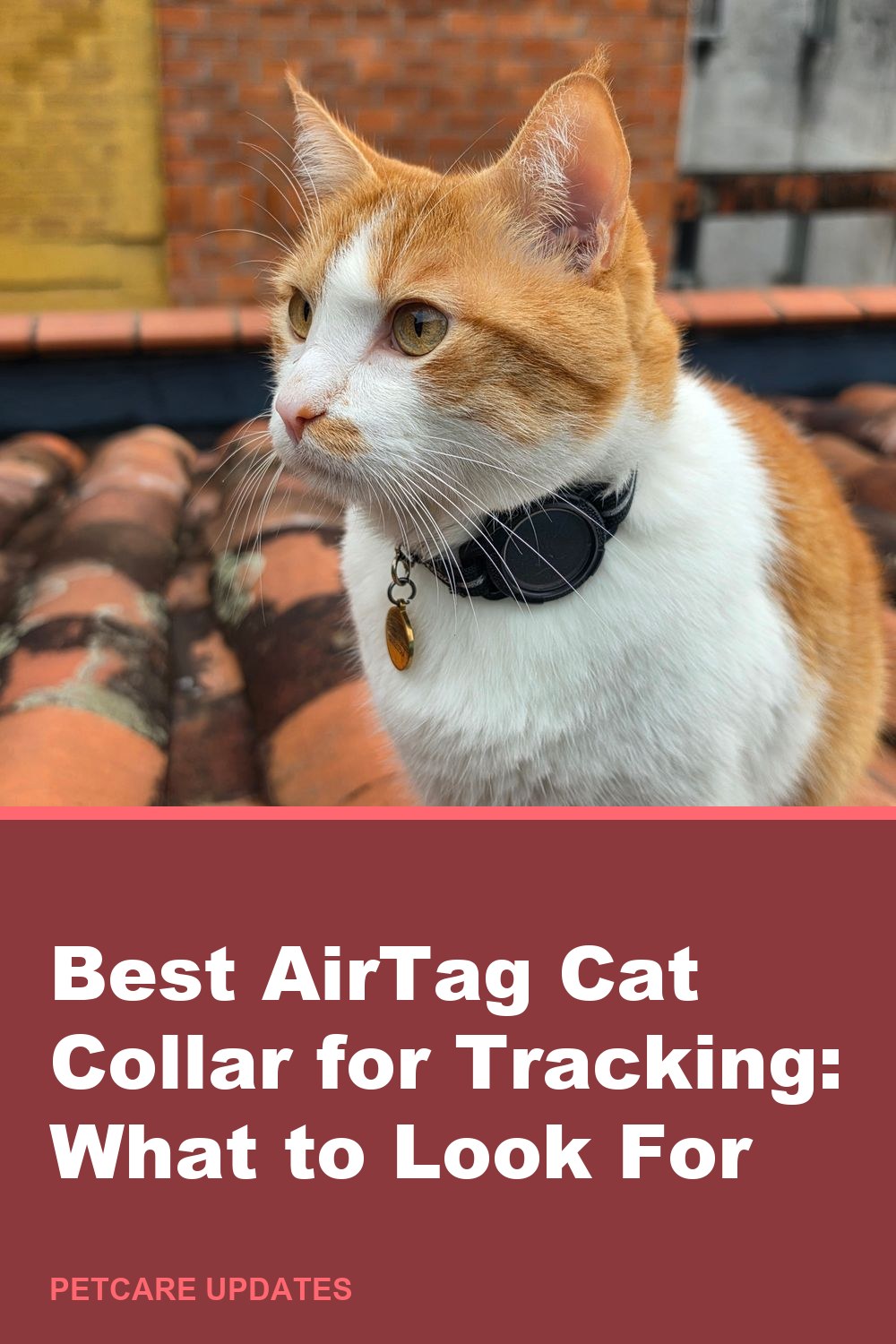

The best AirTag collar for a cat is one that releases safely, shows up in the dark and holds the tracker firmly, in that order. A tracker only helps if the collar around your cat's neck is not a hazard. A recent Cats.com review of the typecase AirTag Reflective Breakaway Cat Collar is a useful test case, because it has all three features and also shows where this kind of collar falls short.
The three features that decide a good AirTag cat collar
Look at the collar first and the tracker second. The AirTag is the same whichever collar carries it. According to Cats.com, an AirTag costs about $29 and needs no subscription. The collar is what changes your cat's day-to-day safety and comfort.
- A breakaway buckle. It lets the collar come apart if it gets caught. The typecase collar has one.
- Reflective material. The typecase collar has a reflective fish pattern that improves visibility in low light, according to Cats.com.
- A secure holder. The typecase holder is silicone, shaped like a cat's head, and fits first- and second-generation AirTags. One Amazon reviewer said the tag is fully surrounded by silicone and does not look likely to fall out.
Cats.com also lists a lightweight, adjustable fabric collar, a small removable bell and several colours. Its drawbacks are that it works only with Apple AirTags, the tag is sold separately, and the holder may be bulky for smaller cats.
What an AirTag can and cannot do for your cat
Set your expectations before you buy. Cats.com explains that AirTags use Bluetooth and Apple's Find My network, which relays a location through nearby Apple devices. When your cat is close to your iPhone, Precision Finding can help you pinpoint them. Farther away, the tag may report a location if another compatible Apple device passes by. Updates are not continuous, and an AirTag is not a real-time GPS tracker.
The reviewer, Annie Butler, found this in practice with her cat Mikki. A straight walk down the street, with her husband wearing the collar on his wrist, tracked well. In the backyard, behind the garage and through the vegetable garden, she often got a weak-signal message, and she called outdoor tracking frustrating and not very reliable. Indoors it worked better. She could tell where Mikki was, especially when she was napping or in a hiding spot.
So an AirTag collar suits cats that hide indoors or slip out for short distances close to home. It is a weaker choice if you hope to follow a cat that roams widely. If you are weighing a location tracker against a health-monitoring one, our post on choosing between a location and a health-monitor cat tracker may help.
How to choose, fit and test an AirTag cat collar, step by step
Do this over about two weeks. Each step has the common mistake and a sign that it is working.
-
Decide what you need (10 minutes, before buying). Write down whether your cat mostly hides indoors, slips out occasionally or goes out regularly.
Common mistake: buying an AirTag collar and expecting live GPS tracking.
How you know it is working: your goal matches what Bluetooth and Find My can do, such as finding a cat in a large house or a hiding spot.
-
Check the breakaway buckle (5 minutes, when the collar arrives). Confirm it is a breakaway design, then handle the buckle yourself. Cats.com notes that reviewers disagreed about the typecase buckle. Some found it too loose and others too stiff to release.
Common mistake: assuming any buckle labelled "breakaway" releases at the right pressure.
How you know it is working: the buckle holds through normal handling but opens when you pull firmly. If it seems extreme either way, ask your vet or return it.
-
Confirm the reflective surface (2 minutes). Look for reflective material on the collar itself, not just a decorative print. Shine a torch on it in a dim room.
Common mistake: choosing a colour for looks and skipping the visibility check.
How you know it is working: the collar stands out when light hits it. Remember that reflective material helps people see your cat in low light. It does not guide the AirTag.
-
Fit the AirTag and judge the size (10 minutes, on day one). Seat the tag in the holder and check that it sits snugly. Then look at the holder against your cat's neck and size. Cats.com says it may be bulky for smaller cats, although most cats did not mind it.
Common mistake: ignoring a holder that is too big for a small cat.
How you know it is working: the tag stays put when you shake the collar gently, and your cat can move normally with the collar on.
-
Introduce the collar slowly (the first few days, short sessions). Mikki did not usually wear a collar and took a while to settle, then stopped minding it. Cats.com's reviewer removed the bell because it bothered her cat, and the typecase bell is removable.
Common mistake: leaving the collar on all day at once, or keeping a bell that stresses your cat.
How you know it is working: your cat eats, grooms, plays and rests as usual. If you see scratching at the collar or changes in behaviour, take it off and ask your vet.
-
Check the collar every day for the first week (1 minute, daily). Look for a loose buckle, a gap at the holder or early tearing. One Amazon reviewer reported a tear in the holder after about two weeks, and another said the collar kept coming off.
Common mistake: trusting the collar completely after one good day.
How you know it is working: the collar is still on and intact each morning, with no damage to the holder.
-
Test the tracking while you are watching (15 minutes, in week one). Start indoors, where the tag worked best for Cats.com. Ask a family member to hold the collar in another room and use Precision Finding. Then test it in a safe outdoor area, but do not rely on the result.
Common mistake: the first real test happens the day your cat is missing.
How you know it is working: you can find the collar room by room. If you get weak-signal messages, move a few feet and try again, as the reviewer did.
-
Keep a backup plan (an ongoing habit). The collar can come off, by design, and the tag then tracks the collar rather than your cat. Noelle, one Amazon reviewer, used it only to find the collar.
Common mistake: treating the tracker as a replacement for supervision, secure doors and windows.
How you know it is working: you still check where your cat is, and the collar is an extra layer of help.
Who the typecase collar suits, based on the Cats.com review
Cats.com called the collar well designed and comfortable, and said the main weakness is tracking range, which comes from the AirTag rather than the collar. Its reviewer would recommend it for owners with large homes or cats that like to hide. On Amazon it averaged 4.3 out of 5 at the time of the review, with mixed but mostly positive feedback. Praise went to the look, the reflective fish design and the easy adjustment.
The complaints are worth weighing. Real-time tracking was the biggest one, some owners said the collar comes off too easily, and the buckle felt different to different people. If your cat hides a lot, our post on why cats hide under the bed and when to worry is worth reading. A tracker can help you find a cat, but it cannot tell you why they are hiding.
If your cat has never worn a collar, expect an adjustment period. Cats that stick close to you may also be easier to supervise than to track. See our post on why cats follow their owners everywhere for more on that behaviour.
FAQ
Do AirTag cat collars work with Android phones?
According to Cats.com, the typecase collar can only be used with Apple AirTags, and AirTags rely on Apple devices and the Find My network. Android owners should look at other tracker types.
Does an AirTag collar need a subscription?
No. Cats.com says AirTags cost about $29 and need no subscription. The tag is sold separately from the collar.
As an Amazon Associate I earn from qualifying purchases: if you buy through these links I may earn a small commission, at no extra cost to you. Each link opens a search on the Amazon store for your country.
Watch or listen to this episode
Sources
Photo: alexander de jesus rios ariz / Pexels

I'm an Italian creator who builds apps, games and websites. I run PetCare Updates with the help of AI tools: every article starts from the sources linked above, and I check what goes out. I'm not a doctor, a lawyer or a financial adviser. Spotted a mistake or have an idea? Write to me.
Instagram @spartaco_94_My websiteWrite to meAbout this blog










 The Basics of Puppy Training: A Comprehensive Guide
 Understanding Feline Behavior: Training Your Cat
 Solving Common Behavioral Issues in Dogs and Cats





