 PetCare Updates

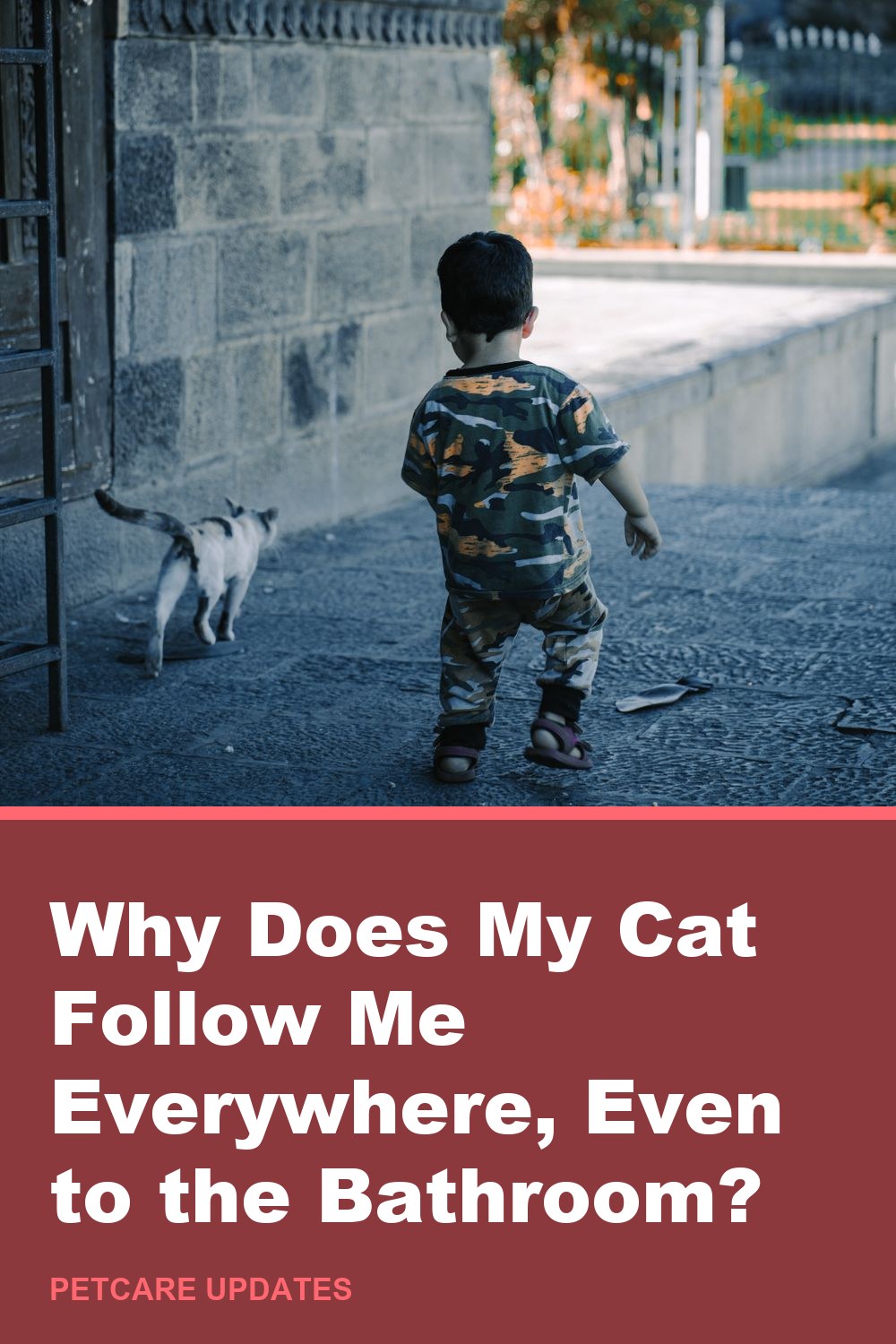

You get up for a glass of water and there's your cat, trotting behind you. You close the bathroom door and a paw appears underneath it, followed by a pointed meow. You love the company, but you've started to wonder what it actually means.
Here's the short answer: in most cats, following you around is normal and healthy. It usually comes down to one or more of five things: attachment to you, curiosity about what you're doing, a learned routine, hunger, or wanting your attention. Shadowing only becomes worth a closer look when it starts suddenly in a cat who used to be independent, or comes with other changes. The rest of this article explains each reason, what to do about it, and the mistakes owners commonly make.
Why does my cat follow me everywhere?
Cats have a reputation for aloofness, but most pet cats form real social bonds with their people. Shadowing is how many of them show it. Usually several of these reasons overlap.
Attachment
You're a safe, familiar presence. Many cats like to stay within a few metres of their favourite person, even if they don't want to be touched. A cat napping in the doorway of whatever room you're in is often doing exactly this.
Curiosity
Cats are natural investigators. Every time you open a cupboard, pick up a bag or walk into a room, something might be happening. Following you is simply the easiest way not to miss it.
Routine
Cats are creatures of habit and learn your patterns quickly. If you usually feed them after you've made coffee, they'll start following you to the kitchen as soon as you're up. Think of a flatmate who wanders into the kitchen every time they hear the fridge door: they're not obsessed with you, they've just learned that good things happen there.
Hunger
A cat who follows you mostly towards the kitchen, especially around meal times, is often telling you something simple. Free-living cats naturally eat several small meals spread through the day and night, so a cat on one or two large meals may feel ready for food well before you think it's due.
Wanting attention
Some cats follow because they want play or a stroke, and they've learned that hovering at your feet gets results. Indoor cats with little to do are especially likely to make you their main source of entertainment.
Why does my cat follow me to the bathroom?
The bathroom is a favourite for good reasons. A closed door is a puzzle to many cats, because it blocks off part of their territory and hides what you're up to. Once inside, you're sitting still, at their level, for a few minutes: an ideal moment for attention or a lap. Many bathrooms also have cool tiles, a dripping tap or a sink that's just the right size to curl up in. If you've ever stroked your cat while sitting there, you've also taught them that this is quality time.
Why does my cat stare at me and meow so much?
Staring and meowing often travel with shadowing. A relaxed stare with slow blinks is generally a friendly sign; try slowly blinking back. Adult cats rarely meow at each other, so much of their meowing is aimed at people, and they learn which sounds get you moving. A cat who meows while following you to the food bowl is usually asking for food; one who meows and then leads you to a toy wants play.
Night-time yowling, a sudden increase in meowing, or a different-sounding voice is another matter. These are reasons to book a vet check rather than guess.
Is it just affection, or something more?
It's very likely affection if your cat follows you but also eats normally, uses the litter tray as usual, plays, sleeps somewhere between 12 and 16 hours a day, and can settle when you're busy.
Call your vet if the following is new and comes with any of these:
- Eating, drinking or weight noticeably more or less than usual
- Changes in litter tray habits
- Hiding, unusual restlessness or seeming confused
- More vocal, especially at night, in an older cat (roughly 10 years and over)
- Distress when you leave, such as constant crying or toileting outside the tray
These signs don't point to any one cause, and only a vet can work out what's going on, but a sudden change in behaviour is always worth mentioning.
How can I give a clingy cat more to do?
The aim isn't to stop your cat following you. It's to make sure you're not their only source of interest. Here's a practical starting plan:
| What to do | How much | Why it helps |
|---|---|---|
| Wand-toy play that mimics hunting | 2–3 sessions a day, 10–15 minutes each | Uses up energy and satisfies the urge to stalk and pounce |
| End play with a "catch" and a small food reward | Every session | Completes the hunt sequence so your cat can settle |
| Puzzle feeders or scattered dry food | Part of the daily ration | Turns meals into activity, closer to natural foraging |
| Regular meal times | Same times daily, split into 2 or more meals | Reduces anxious following around food |
| Window perch or cat tree | At least one high spot per cat | Gives height, safety and something to watch |
| Rotate toys | Swap a few out every week or so | Keeps old toys feeling new |
Schedule play just before you'll be busy, such as before you start work or cook dinner. A tired, fed cat is far more likely to nap than to shadow you.
What the research says
Studies of cats and their owners suggest that a majority of cats show signs of secure attachment to their people, using them as a base and relaxing when they're near. That fits what most owners see at home.
The Cornell Feline Health Center's guidance on cat behaviour and health stresses that changes in behaviour can be an early sign of illness, which is why a new pattern deserves a vet visit. International Cat Care's advice on what cats need highlights frequent small meals, opportunities to hunt-play and places to hide and climb as core needs. The ASPCA's general cat care advice recommends daily interactive play and enrichment, especially for indoor cats, and the PDSA's pet welfare guidance lists a suitable environment and the chance to behave normally as basic welfare needs.
Common mistakes
- Shutting the cat out or scolding them. Punishment doesn't remove the need behind the behaviour. It can make an attached cat more anxious and more clingy.
- Feeding every time they follow you to the kitchen. This teaches your cat that shadowing equals food. Stick to set meal times and use part of the ration for puzzle feeders instead.
- Assuming it's always "just personality". Most shadowing is harmless, but a sudden change, especially in an older cat or alongside eating, drinking or litter tray changes, is a reason to call your vet.
This article is general information and does not replace a visit to your vet. If your animal seems unwell, in pain or has eaten something toxic, call your vet straight away.
Watch or listen to this episode

I'm an Italian creator who builds apps, games and websites. I run PetCare Updates with the help of AI tools: every article starts from the sources linked above, and I check what goes out. I'm not a doctor, a lawyer or a financial adviser. Spotted a mistake or have an idea? Write to me.
Instagram @spartaco_94_My websiteWrite to meAbout this blog










 The Basics of Puppy Training: A Comprehensive Guide
 Understanding Feline Behavior: Training Your Cat
 Solving Common Behavioral Issues in Dogs and Cats





