 PetCare Updates

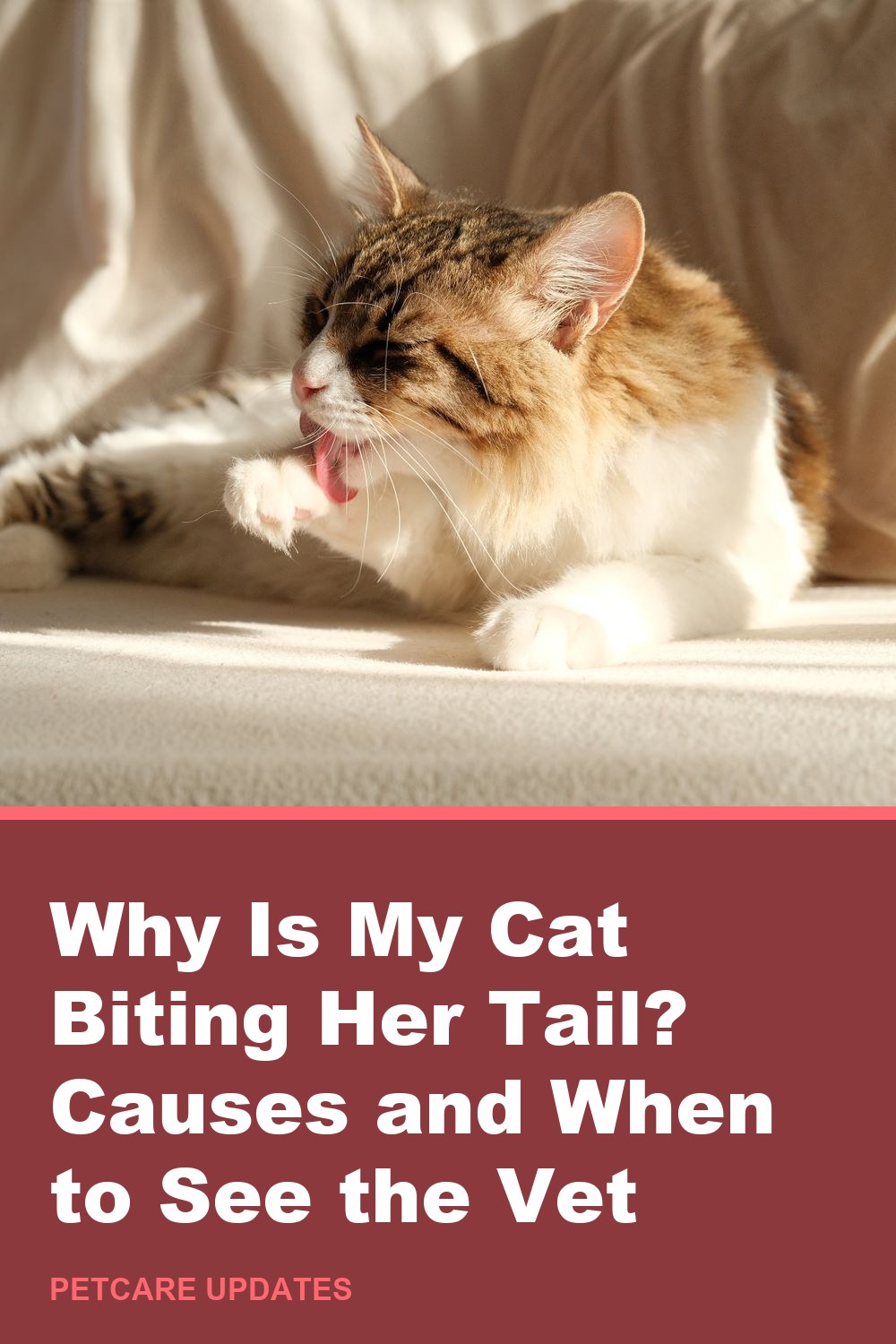

- A quick tidy of the tail is normal grooming; frantic, repeated biting that leaves bald or raw skin is not and deserves attention.
- Itch from fleas or allergies, pain, and stress are the main causes, so rule out the physical ones with your vet before assuming it is behaviour.
- Keep a short diary of when, where and how long she bites, plus photos of the tail, so your vet gets facts instead of guesses.
A cat who bites her tail is usually telling you something is wrong: she may be itchy, sore or stressed, and sometimes bored. An occasional tidy-up is normal grooming, but frantic, repeated biting, bald patches or raw skin are worth a vet visit. According to feline behaviorist Melina Grin, writing for Cats.com, tail biting is not simply a bad habit. It can come from medical, psychological or environmental causes, and finding the root cause is the first step to helping her. Acting early matters because a coping habit that starts small can become harder to stop.
Normal grooming or a problem worth acting on?
Cats are meticulous groomers. Cats.com notes that it is normal for them to use their teeth to work out a knot or clear dirt from the tail, and a quick wash after a meal is no cause for concern.
Pay closer attention if you see any of these:
- frantic or repeated tail chasing and biting
- hair loss, thinning fur or scabs on the tail
- skin rippling along her back, or sudden attacks on her own tail
- aggressive chewing that leaves bald patches and raw skin
If you only see the first kind of behaviour, calm and brief, you can simply keep watching. If you see any of the list above, move on to working out why.
First suspect: an itch from fleas, mites or allergies
The causes below are ordered by what is easiest to check and rule out first, not by how common they are. Itch comes first because it is the most visible.
Cats.com describes Flea Allergy Dermatitis, an intense sensitivity to flea saliva. In an affected cat, one or two bites can cause an unbearable itch at the base of the tail or on the lower back. Mites and ringworm can cause similar strong irritation. When the itch is overwhelming, a cat may lash out at her own tail hoping for relief.
Allergies are another route. Cats can react to dust, mould or pollen, and to food proteins such as chicken, beef or fish. With atopic dermatitis you would typically see constant scratching around the head, neck and hindquarters, and sometimes the tail too.
You may not see a flea at all, which is why a single bite can matter. Part the fur at the tail base and lower back and look for scabs, redness or specks. Whatever you find, leave the treatment choice to your vet, because the right option depends on the cause.
Second suspect: pain in the back end
Cats cannot tell you where it hurts, so they may chew the nearest reachable spot. Cats.com lists several painful causes:
- Joint problems. Melina Grin describes one of her own cats, diagnosed with hip dysplasia and osteoarthritis, who licks or chews at her lower back and sometimes her tail to soothe the discomfort.
- Injury. A fracture, a minor dislocation or an old abscess wound can hurt in a similar way.
- Spinal disease. Intervertebral Disc Disease is very painful, and radiating pain may make a cat gnaw at the area.
- Anal glands. If the two scent glands beside the anus are blocked or infected, a cat may scoot her bottom across the floor, lick the area or chew the tail tip.
- Stud tail. Overactive oil glands at the tail base can block follicles and cause painful, acne-like infections, leaving the tail tender.
Scooting, a tender tail base, or a cat who flinches when you touch her back are all clues to mention at the appointment.
Stress and territory: when the home feels unsafe
If the skin looks healthy and she seems comfortable, stress moves up the list. Cats.com says cats are creatures of habit who need to feel in control of their territory. Big disruptions such as a house move, loud renovations, a long absence by the owner, or a stay in a veterinary hospital or cattery can shake their confidence. A cat who cannot change her surroundings may turn that stress inward.
The same source points to a few specific triggers:
- A bully in a multi-cat home. One cat may quietly hog food bowls, block doorways or stare housemates down. The anxious cat cannot confront or escape the bully and may redirect the tension onto her own tail.
- A new arrival. A tense introduction to a new dog, or a lively kitten whose constant play wears on an older cat, can set it off.
- An outdoor intruder. Seeing a stray cat through the window can cause territorial frustration when she cannot chase it away.
Think back over the last few weeks. Did anything change before the biting began? If you also see hiding, our post on why a cat hides under the bed and when to worry covers other stress signs.
Boredom: a hunter with nothing to hunt
Cats.com says active, intelligent breeds such as Bengals, Savannahs, Abyssinians and Siamese can turn destructive when they lack mental and physical stimulation, because their predatory drive has no outlet. A frustrated cat of any breed may start targeting her tail if the home lacks vertical space or simulated hunting games.
If she bites mostly in the evening, or when the house is quiet and she has nothing to do, boredom is a fair guess. It is still best to rule out the physical causes first, since an itchy cat can look bored too.
Less common: nerve-related episodes and compulsive habits
Cats.com describes Feline Hyperesthesia Syndrome, in which the nervous system goes into overdrive. Episodes typically happen at dawn or dusk but can occur at any time. Look for skin rippling along the back, followed by sudden hissing, vocalising, frantic running or tail twitching. The source suggests it may cause electric-shock-like sensations that lead a cat to attack her lower back and tail. Local nerve damage along the spine can cause similar radiating pain.
The source also warns that long-running conflict can turn a coping behaviour into a compulsive one. Its author saw this at home: a resident cat, physically kept apart from a new kitten she wanted to drive off, began repeatedly biting her tail to self-soothe. Over time, the article says, such a habit can become ingrained and hard to switch off without behavioural therapy and veterinary medical support. That is why waiting months to see if it passes is a poor plan.
How to tell which cause fits: a quick home checklist
You are not diagnosing, only gathering clues. Over a few days, note:
- Where. Is it the tail base, the tip, or the whole length? Base and lower back point toward itch or back pain. The tip may fit anal gland trouble.
- When. Dawn or dusk? After visitors, after the dog gets near her, or when a cat appears at the window?
- What else. Scooting, licking the anal area, scratching head and neck, flinching when touched, skin rippling, sudden hissing or running.
- What the skin looks like. Scabs, thinning fur, bald patches, raw areas. Take dated photos.
- What changed. A move, new pet, builders, your absence, a stay at a cattery or clinic.
- Who else is in the house. Does one cat block doors or guard the bowls?
A reference such as Bestiepedia's when to call the vet page can help you decide how urgent a symptom is, but your own vet knows your cat best.
Signs that mean book the vet now
Phone your vet rather than waiting if you see:
- raw skin, scabs, bleeding or bald patches on the tail
- biting that is frantic, repeated or hard to interrupt
- skin rippling along the back, sudden hissing, or frantic running
- scooting, licking the anal area, or a tender tail base
- signs of back or hip pain, or a recent fall or fight
- constant scratching around the head, neck and hindquarters
Bring your notes and photos. Your vet can look for parasites, skin infection, pain and other physical causes before you work on behaviour. Do not start any flea or skin product on your own: ask your vet what suits her.
What you can do at home while you wait
- Check the coat gently. Use a fine-toothed comb on the tail base and lower back, and tell your vet what you find.
- Don't punish or startle her. She is reacting to discomfort or anxiety, and scolding adds to the stress.
- Add hunting play. Short sessions with a wand toy give her predatory drive a proper target. Cats.com stresses simulated hunting games and vertical space.
- Give her height. A cat tree or sturdy shelf lets her survey and escape.
- Ease multi-cat tension. Offer food in more than one place and keep doorways and routes clear, so no cat can guard them.
- Cover the window. If outdoor cats upset her, limit her view of them.
- Keep routines steady. Predictable meals and play help after a move or other upheaval.
If stress is the cause, your vet may suggest working with a behaviourist. I wrote more about triggers like these in our post on why cats lick, where the line between comfort habit and warning sign also matters.
I wrote an ebook on this: Solving Common Behavioral Issues in Dogs and Cats.
As an Amazon Associate I earn from qualifying purchases: if you buy through these links I may earn a small commission, at no extra cost to you. Each link opens a search on the Amazon store for your country.
Watch or listen to this episode
Sources
Photo: Kaan Keskin / Pexels

I'm an Italian creator who builds apps, games and websites. I run PetCare Updates with the help of AI tools: every article starts from the sources linked above, and I check what goes out. I'm not a doctor, a lawyer or a financial adviser. Spotted a mistake or have an idea? Write to me.
Instagram @spartaco_94_My websiteWrite to meAbout this blogWritten by Ciro Irmici (Ciro Simone Irmici), with the help of AI tools. Ciro Irmici's website











 The Basics of Puppy Training: A Comprehensive Guide
 Understanding Feline Behavior: Training Your Cat
 Solving Common Behavioral Issues in Dogs and Cats





