 PetCare Updates

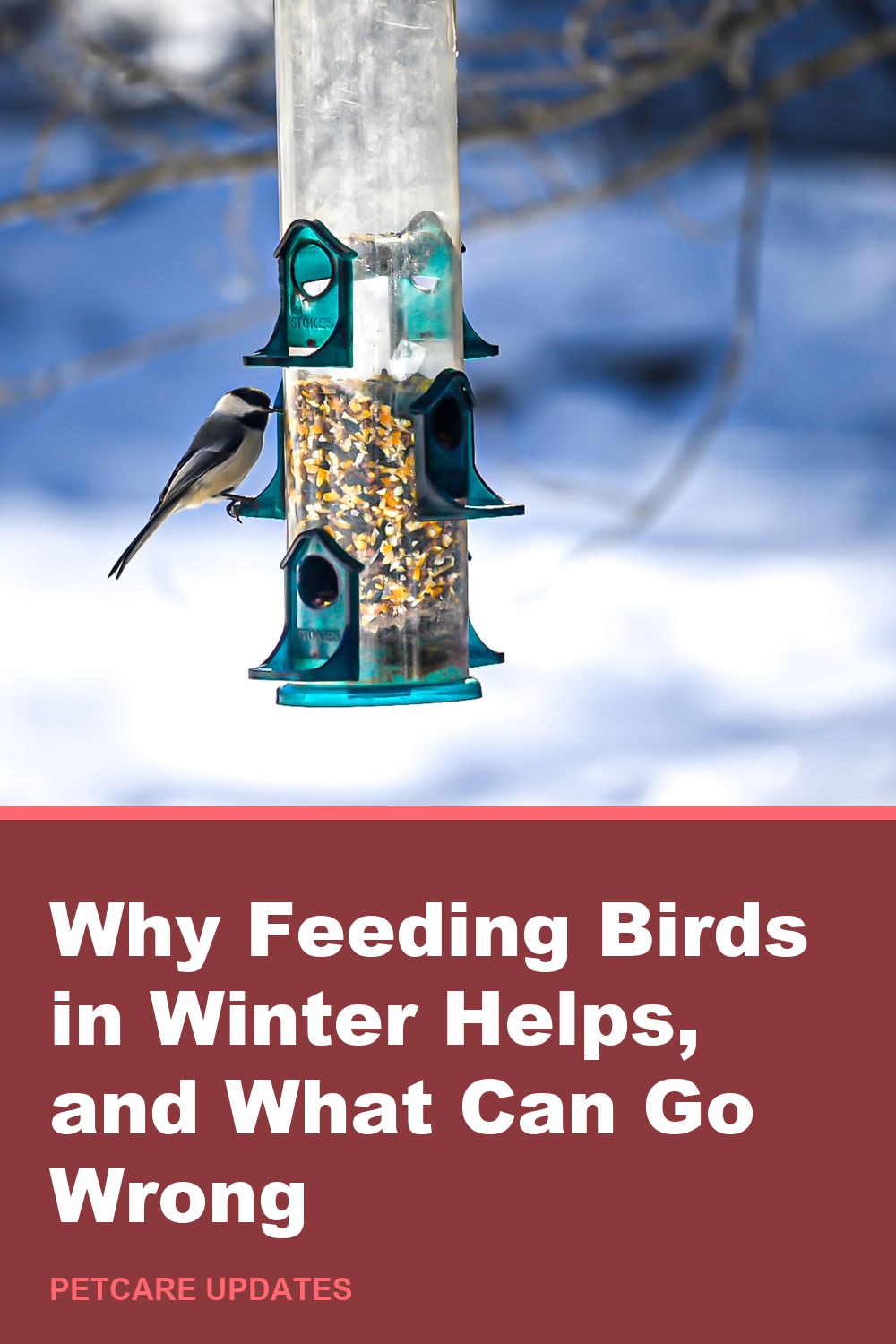

It's a frosty morning, the lawn is white, and a handful of sparrows and tits are hopping around your empty feeder. You want to help, but you've also heard that feeding birds can spread disease or do more harm than good. Both things are true, and the difference comes down to a few simple habits.
The short answer: feeding birds in winter helps because small birds burn a lot of energy just staying warm, and short days leave them little time to find food. A well-stocked, clean feeder with the right food and unfrozen water can tide them through cold snaps. It goes wrong when feeders get dirty, when the food is unsuitable, or when water is missing or frozen. Each of those is easy to fix.
Why do garden birds struggle so much in winter?
Small birds have a big surface area for their size, so they lose heat fast. A blue tit weighs around 11 grams, roughly the weight of two sugar cubes, and has very little room to store fat. On a cold night it can use up to about 10% of its body weight just keeping warm, then wake up needing to refuel immediately.
Think of a small bird like a phone with a tiny battery on a freezing day. The cold drains the battery faster, and there's only a short window to plug it back in. In midwinter in northern Europe, daylight can shrink to around 7 to 8 hours. That's the bird's whole charging time, and natural food such as insects, seeds and berries is scarce, buried under snow or locked in frozen ground.
How do feeders actually help?
A feeder is a reliable, high-energy charging point. Instead of spending precious daylight searching hedges, a bird can top up quickly on fat and oil-rich seed, then spend the rest of the day sheltering and conserving heat. That matters most during cold spells, snow and hard frosts, when foraging elsewhere costs more energy than it returns.
Consistency counts too. Birds learn where food is, so a feeder that's topped up every morning, ideally early, becomes part of their daily route. If you go away, it's better to taper off gradually than to stop suddenly in the middle of a freeze.
What should I put out, and what should I avoid?
High-energy, natural foods work best. Here's a quick guide:
| Good choices | Avoid |
|---|---|
| Sunflower hearts | Salted or dry-roasted peanuts |
| Plain, unsalted peanuts in a mesh feeder | Bread as a main food (fills birds up with little nutrition) |
| Fat balls or suet blocks made for birds | Cooked fat from roasting tins (soft, greasy, can smear feathers) |
| Nyjer seed for finches | Milk |
| Soft apples, pears, soaked raisins and sultanas* | Desiccated coconut |
| Mealworms (dried or live) | Mouldy or stale food of any kind |
*Grapes, raisins and sultanas are toxic to dogs, so put them where your dog can't reach them.
Remove fat balls from their plastic mesh bags before hanging them in a proper feeder. Birds' feet and tongues can get caught in the netting.
How do I keep feeders clean without overdoing it?
Dirty feeders are the biggest risk. Droppings and old, damp food let germs build up, and birds crowding together pass them on. A simple routine keeps that in check:
- Clean feeders about once a week, more often in busy or wet spells.
- Scrub with hot soapy water or a mild disinfectant suitable for bird feeders, wearing gloves.
- Rinse thoroughly and let everything dry fully before refilling, so seed doesn't go mouldy.
- Clear spilled seed and droppings from the ground beneath.
- Move feeders to a new spot every few weeks so waste doesn't build up in one place.
- Put out only what birds eat in a day or two.
- Wash your hands afterwards, and use separate brushes from your kitchen ones.
If you notice birds at your feeder that look fluffed up, lethargic or unwell, stop feeding for around two weeks and clean everything. That gives birds a chance to disperse so illness spreads less. Don't try to treat a wild bird yourself: contact a local wildlife rescue, the RSPCA or your vet for advice.
Do birds really need water when it's cold?
Yes. Birds need water to drink and to bathe, because clean feathers insulate far better than dirty ones. When everything freezes, a bird bath may be their only source.
- Use a shallow dish, ideally 2.5 to 10 cm deep with sloping sides.
- Change the water daily and scrub the dish weekly.
- To keep it ice-free, float a small ball on the surface so the wind moves it, or top up with lukewarm (never boiling) water each morning.
- Never add salt, antifreeze or glycerine. They're harmful to birds and, in the case of antifreeze, dangerously toxic to pets too.
Where should I put the feeder?
Position matters for safety. Place feeders around 2 metres from dense shrubs: close enough that birds can dash to cover, far enough that a cat can't ambush them from inside. To reduce window strikes, put feeders either within about 1 metre of a window or more than 10 metres away. Close up, birds can't build up speed; far away, they're less likely to mistake the glass for open sky.
What the research says
The RSPB's garden bird guidance explains that small birds can lose a significant share of their body weight on cold nights and recommends high-energy foods, fresh water and regular feeder hygiene, including pausing feeding when sick birds appear. The National Audubon Society advises cleaning feeders regularly and placing them very close to or well away from windows to cut collisions. The RSPCA's wildlife welfare advice covers safe feeding and what to do if you find an injured or sick wild bird. For anyone with pets, the ASPCA Animal Poison Control lists grapes, raisins and antifreeze among common household dangers to dogs and cats, a useful reminder when choosing what to put out.
Common mistakes
- "Any leftovers are better than nothing." Salty, cooked or mouldy food can make birds ill. Bread fills them up without giving the fat they need to survive a freezing night.
- "Once a month is enough for cleaning." In winter, when feeders are busiest, germs build up quickly. Weekly cleaning is the sensible baseline.
- "Birds get water from snow." Eating snow costs a bird precious body heat to melt it. A dish of unfrozen water saves them that energy and lets them keep their feathers clean.
Get the food, the cleaning and the water right, and your garden becomes a safe refuelling stop all winter long.
This article is general information and does not replace a visit to your vet. If your animal seems unwell, in pain or has eaten something toxic, call your vet straight away.
Watch or listen to this episode

I'm an Italian creator who builds apps, games and websites. I run PetCare Updates with the help of AI tools: every article starts from the sources linked above, and I check what goes out. I'm not a doctor, a lawyer or a financial adviser. Spotted a mistake or have an idea? Write to me.
Instagram @spartaco_94_My websiteWrite to meAbout this blog










 The Basics of Puppy Training: A Comprehensive Guide
 Understanding Feline Behavior: Training Your Cat
 Solving Common Behavioral Issues in Dogs and Cats





