 PetCare Updates

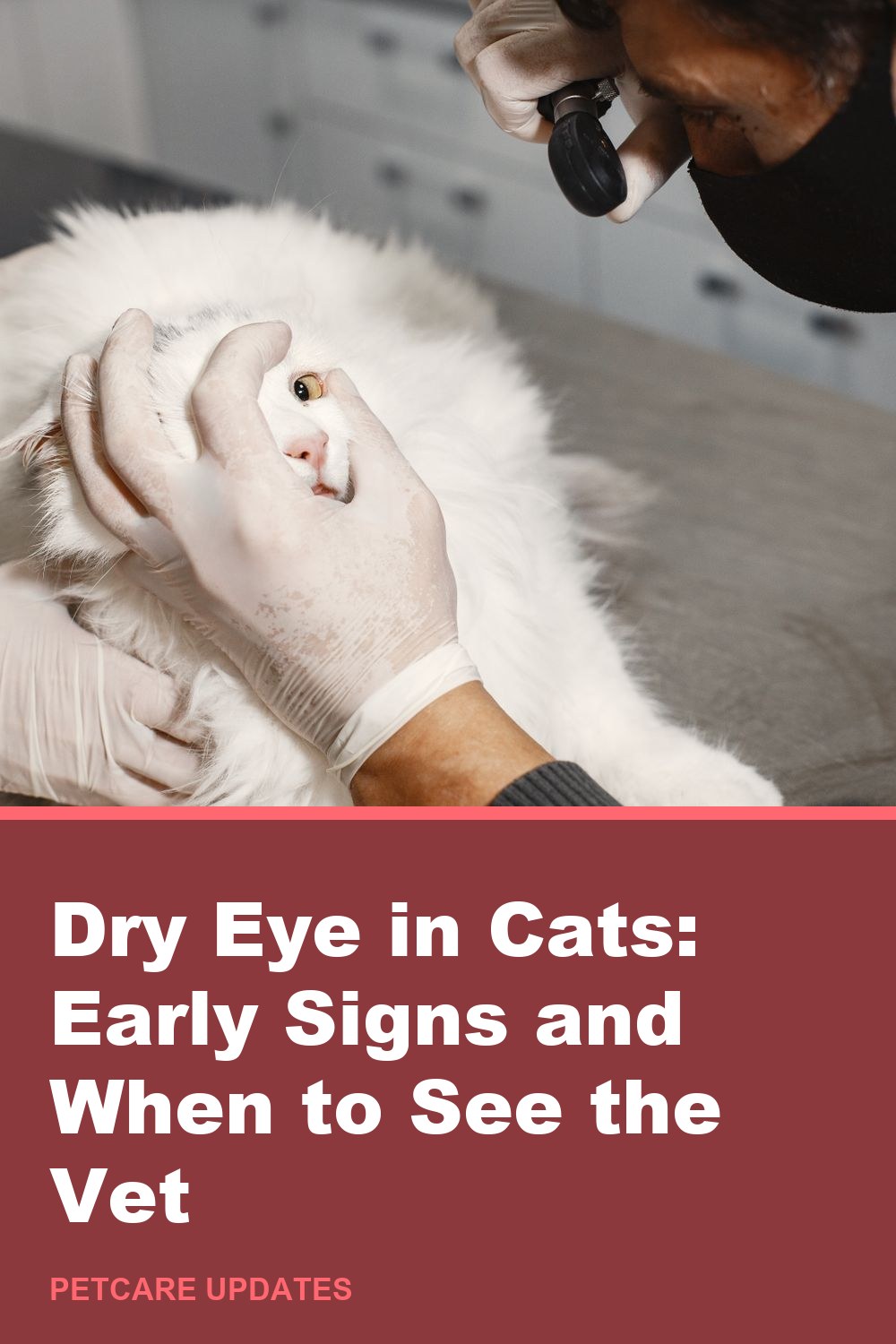

Dry eye, known to vets as keratoconjunctivitis sicca (KCS), is an uncommon condition in cats. According to Cats.com, it is still important to catch, because it causes pain and can affect vision. An eye that looks a little red or sticky can be easy to dismiss. This guide explains what dry eye is, which signs to watch for, what a vet will do to confirm it, and when to make the call.
What dry eye actually is
The clear front surface of the eye, the cornea, has no blood supply of its own. It depends on the tear film to stay lubricated, to wash away debris and to receive nutrients such as oxygen. When part of that tear film is missing or not working properly, the surface becomes inflamed. That is dry eye.
The tear film has three layers, each made by a different structure around the eye. Cats.com explains that loss of any layer can cause KCS, but losing the watery layer is the most common problem and the most harmful. Without it, the eye surface loses both moisture and nourishment.
| Tear film layer | Where it comes from | What it does |
|---|---|---|
| Aqueous (watery) layer | Lacrimal glands in the upper eyelid and the third eyelid | The thickest layer; feeds the eye surface |
| Lipid (fatty) layer | Meibomian glands along the eyelids | Sits on top and stops the watery layer from evaporating |
| Mucoid layer | Goblet cells in the conjunctiva, under the eyelids | Helps the watery layer spread evenly over the eye |
Why cats develop it
Cats.com names one of the most common causes as the immune system attacking the tear-producing lacrimal glands so they stop working. Some cats may have a genetic predisposition. Other causes in the article include:
- Feline herpesvirus (FHV-1) infection that inflames the cornea and the lacrimal glands.
- Sulfa-class antibiotics, which are rarely used in cats.
- NSAID pain medicines, again uncommonly linked to the problem.
- Neurogenic KCS, where the nerves that tell the tear glands to work do not function properly.
- Hypothyroidism, which is extremely rare in cats.
If your cat is on any medication and you notice eye changes, tell your vet. Do not stop a prescribed medicine on your own.
What to look for at home
Dry eye can look different depending on how severe it is. At its worst, Cats.com says, the eye is red and irritated with a thick, mucus-like discharge. The discharge is thick and sticky because the lipid and mucoid layers are often still being made while the watery layer is not.
A dry surface is also more open to damage. The article describes how loss of moisture and protection can lead to a corneal ulcer, and bacterial infection can make an ulcer worse. KCS is already uncomfortable, and an ulcer makes it especially painful.
Dry eye can look like other eye problems. Ulcers can also follow a scratch or wound, or come from eyelid or eyelash abnormalities that irritate the cornea. You cannot tell these apart by looking, which is why the diagnosis has to come from a vet.
What happens if it goes untreated
Untreated dry eye means ongoing pain for your cat. Over time it also threatens sight. Cats.com explains that chronic irritation of the cornea leads to cloudy scarring and pigmentation, a brown staining that can block vision. Treatment can reverse pigmentation to a degree and help vision, but it often cannot be cleared completely. Early attention gives your cat the best chance of avoiding that damage.
How vets confirm dry eye
The standard test is the Schirmer tear test. A thin paper strip with a millimetre scale is tucked just under the lower eyelid. It soaks up tears, and the vet measures how far the moisture travels, usually over one minute.
Cats.com notes that a common normal range in dogs is 15 to 20 millimetres in one minute, but cat results are more variable. Stressed cats may make fewer tears, which can artificially lower the number. For this reason the result is read alongside your cat's signs, not on its own.
Your vet may also check tear film break-up time. A drop of fluorescein dye, the same dye used to find corneal ulcers, is placed on the eye. The eyelids are closed a couple of times to spread it, and the vet watches the surface under a special light.
What this means for you: a practical checklist
You do not need to diagnose anything at home. Your job is to notice changes early, record them and get your cat seen. Use the steps below.
- Look at both eyes in good light once a week while your cat is relaxed. Compare one eye with the other.
- Note thick, sticky or mucus-like discharge and any redness. These are the signs Cats.com links to dry eye.
- Watch for signs of discomfort. If your cat seems bothered by an eye, treat it as a possible pain problem and not a cosmetic one.
- Check for cloudiness or brown staining on the surface of the eye. These suggest changes that have been building for some time.
- Take a clear photo in daylight and write down when the signs began. This helps your vet, especially if the eye looks different at the appointment.
- Book a vet visit rather than waiting to see if it clears up. Ask your vet before putting anything in the eye, including drops you already have at home.
- Tell your vet about your cat's history: past herpesvirus infection, current or recent medicines, and any thyroid problems.
- Keep the visit calm. Since stress can lower tear test results, use a secure carrier and a quiet approach so the reading reflects your cat's eyes as accurately as possible.
When to go sooner
Any eye that is red, sticky and sore deserves a prompt appointment. Because a corneal ulcer can develop on a dry surface and is especially painful, do not wait if the eye looks worse or your cat seems to be in pain. Your vet can decide which treatment suits your cat, so ask them before giving any medicine yourself.
FAQ
Is dry eye common in cats?
No. Cats.com describes it as uncommon in cats. It is still worth knowing about because it is painful and can damage vision if it is missed.
Can dry eye in cats cause blindness?
The article explains that long-term irritation can cause cloudy scarring and brown pigmentation on the cornea, which can obscure vision. Treatment may improve pigmentation to a degree, but it often cannot be fully reversed. Ask your vet what to expect for your own cat.
How do vets test a cat for dry eye?
The main test is the Schirmer tear test, which measures tears absorbed by a paper strip over about a minute. Vets may add a tear film break-up test using fluorescein dye. Because stress can lower a cat's tear result, the numbers are judged alongside the signs your cat is showing.
Watch or listen to this episode
Sources
Photo: Gustavo Fring / Pexels

I'm an Italian creator who builds apps, games and websites. I run PetCare Updates with the help of AI tools: every article starts from the sources linked above, and I check what goes out. I'm not a doctor, a lawyer or a financial adviser. Spotted a mistake or have an idea? Write to me.
Instagram @spartaco_94_My websiteWrite to meAbout this blog










 The Basics of Puppy Training: A Comprehensive Guide
 Understanding Feline Behavior: Training Your Cat
 Solving Common Behavioral Issues in Dogs and Cats





