 PetCare Updates

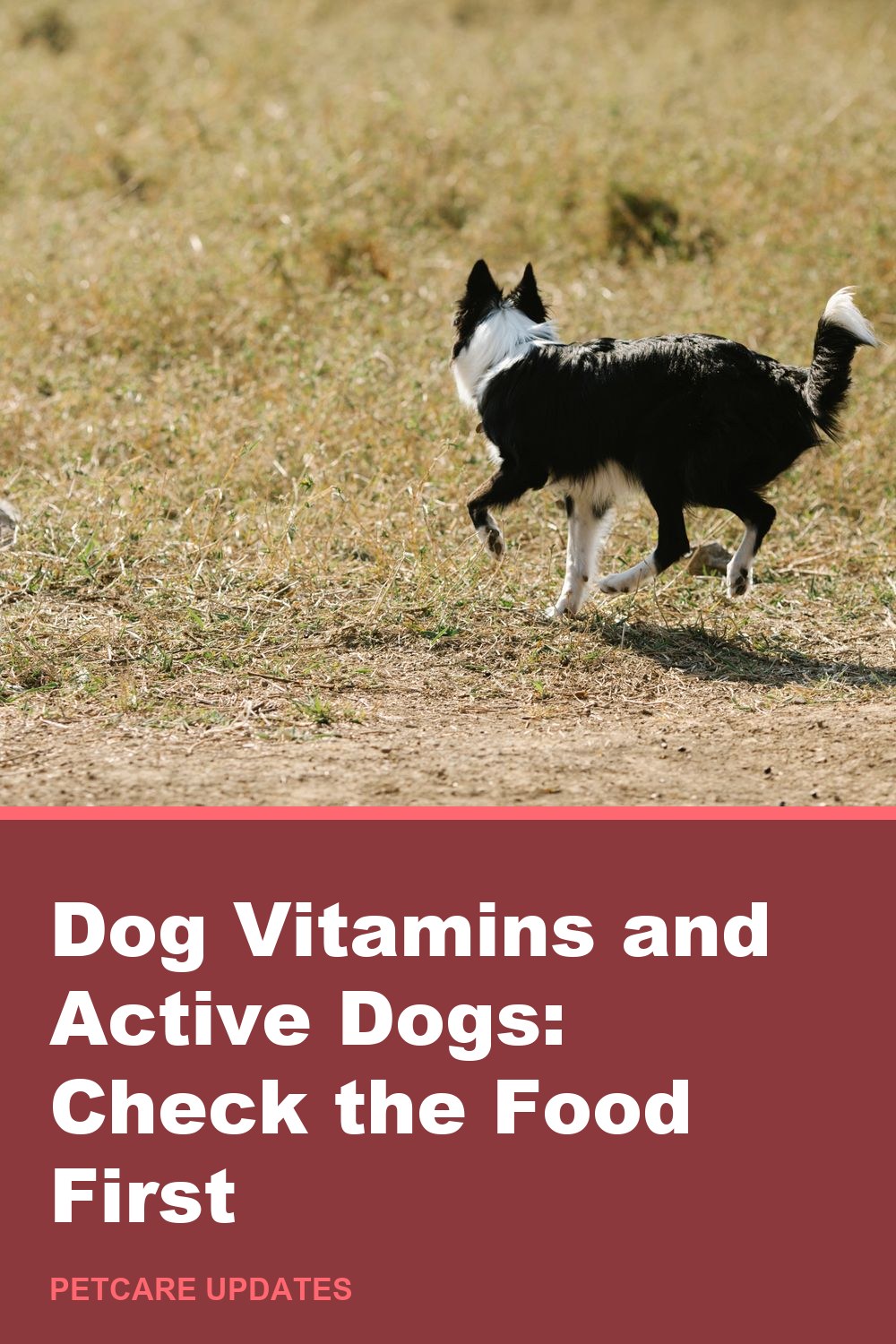

If your dog eats a complete and balanced diet, a daily multivitamin is probably not doing much for them. According to Whole Dog Journal, daily vitamins are not necessary for most healthy dogs, because the food already supplies them. The exception is the dog that works hard. For agility, field or herding dogs, the bigger question is not vitamins but whether the calories and nutrients match the workload.
Below: how to check your dog's food before buying a supplement, how to tell whether your dog counts as "active", and how to adjust the bowl if so.
Start with the bowl, not the supplement shelf
It is easy to assume that a pot of vitamins is cheap insurance. But if the food is already complete and balanced, you are mostly adding something the dog is already getting. Whole Dog Journal's advice for most healthy dogs is simple: the vitamins come with the food.
So the first job is to look honestly at what you feed. Dr. Mary Cope, a companion animal nutritionist interviewed by Whole Dog Journal, says to start with a food that is complete and balanced, made by a reputable manufacturer, and suited to the dog's life stage. A puppy, an adult and a senior have different needs, and the food should match the stage your dog is in.
If you feed a home-prepared diet, or you are not sure your dog's food meets that standard, that is the moment to talk to your vet. Do that before you buy any supplement.
Is your dog actually "active"?
Many owners describe their dog as active. Dr. Cope uses a narrower definition. In nutrition terms, an active dog is one that regularly burns more energy than an average pet. Think sports and work such as agility, hunting, field work, herding or dock diving, done more than a few times a week.
Ordinary daily walks do not put a dog in this group. A dog that loves a long walk and a garden romp is still, nutritionally, a typical pet. The trigger for a change in feeding is often simple: the dog starts spending more energy than it takes in.
What changes when a dog works hard
Calorie needs rise first. The usual sign is a dog who starts to look a little ribby. Dr. Cope points out that fat carries more than double the calories of protein or carbohydrate, so fat is the most efficient thing to adjust first. Protein goes up only modestly, to help maintain and repair muscle. She also likes to see ingredients that support joints and muscle function.
There is a practical side too. Some hard-working dogs feel full before they have eaten enough of an ordinary food. For them, a bigger scoop is not the answer.
More of the same food, or a different one?
It depends on how hard the dog works:
- A moderately active dog may only need a bit more of a complete and balanced diet.
- A very active or working dog often does better on a performance formula. These foods pack more energy into each portion, so the dog eats a smaller volume while the balance of nutrients to calories stays right.
Food, workload and what to watch: a quick comparison
This table pulls together the guidance from Whole Dog Journal and Dr. Cope for three kinds of dog.
| Type of dog | Feeding approach | What to watch |
|---|---|---|
| Healthy pet, normal daily walks | Complete and balanced food for the dog's life stage; a daily vitamin is usually unnecessary | Body condition and general health at routine vet visits |
| Moderately active dog | Possibly a bit more of the same complete and balanced food | Ribs becoming too easy to see, or weight creeping up |
| Very active or working dog | Often a performance formula; Dr. Cope looks for around 30% protein and roughly 20-25% fat | Energy, body condition, muscle tone, stool quality and recovery |
What this means for you
Here is a sensible order of play, whatever kind of dog you have.
- Read your dog's food first. Check that it is complete and balanced and right for your dog's life stage before you consider any vitamin product.
- Decide honestly whether your dog is active. Sport or work several times a week counts. Daily walks alone do not.
- Weigh your dog regularly. Dr. Cope calls regular weigh-ins the most valuable tool you have. Write the numbers down so you can see a trend, not just a single day.
- Judge the body, not just the scale. An active dog should look lean and muscular. Ribs that are too prominent, slow recovery or falling performance point to too few calories. Gaining fat despite the activity points to too many.
- Change food gradually. If you try a performance formula, Dr. Cope suggests transitioning slowly, ideally with a smaller bag first in case it does not suit your dog.
- Review how the dog does on it. Look at energy, condition, muscle tone, stool quality and recovery over time.
- Bring your vet in. Ask your vet to help fine-tune the plan, and before you add anything to the diet.
Supplements for working dogs
Even for active dogs, Dr. Cope says most get what they need from a complete and balanced diet. She notes that some dogs in intense activities may benefit from targeted omega-3s for joint health. Whether your dog is one of them, and what product and amount would suit, is a question for your vet. Do not guess.
Water and heat matter as much as food
Dr. Cope calls water the most important nutrient, for every dog. Dogs cool themselves mainly by panting, so they lose more water as they exercise. Keep fresh water available throughout the day and during activity.
She also raises a real safety point. In extreme heat and humidity, evaporative cooling stops working properly, so even casual walks call for caution. If your dog is prone to bloat, be careful about letting them gulp a large amount of water in one go. Your vet can tell you whether your dog is in that group.
The one thing to track
If you only keep tabs on one thing, make it body condition. It tells you more about whether the calories are right than any label claim. A lean, muscular dog who recovers well is being fed about right for the work. A dog losing definition or gaining fat needs a change to the plan.
FAQ
Do dogs need a daily multivitamin?
According to Whole Dog Journal, most healthy dogs do not, because they get their vitamins from their food. If you are unsure whether your dog's diet is complete and balanced, or your dog has a health condition, ask your vet before adding anything.
How do I know if my dog counts as an active dog?
Dr. Mary Cope describes an active dog as one that burns noticeably more energy than a typical pet, usually through sports or work such as agility, hunting, field work, herding or dock diving more than a few times a week. Normal daily walks do not count.
What should I feed a very active dog?
Start with a complete and balanced food from a reputable maker, suited to the dog's life stage. For very active dogs, Dr. Cope looks for higher calorie density with around 30% protein and roughly 20-25% fat. Watch your dog's energy, body condition, muscle tone, stools and recovery, and agree any change with your vet.
- A digital scale for regular weigh-ins of your dog
- A collapsible water bowl to carry on walks and training
As an Amazon Associate I earn from qualifying purchases. Links open a search on the Amazon store for your country.
Watch or listen to this episode
Sources
- Whole Dog Journal: How to Choose the Best Dog Multivitamin for Your Dog’s Needs
- Whole Dog Journal: Active Dog Nutrition: What to Feed a High-Energy Dog
Photo: Blue Bird / Pexels

I'm an Italian creator who builds apps, games and websites. I run PetCare Updates with the help of AI tools: every article starts from the sources linked above, and I check what goes out. I'm not a doctor, a lawyer or a financial adviser. Spotted a mistake or have an idea? Write to me.
Instagram @spartaco_94_My websiteWrite to meAbout this blog










 The Basics of Puppy Training: A Comprehensive Guide
 Understanding Feline Behavior: Training Your Cat
 Solving Common Behavioral Issues in Dogs and Cats





